
Advantage & Challenge of Diverse Teams
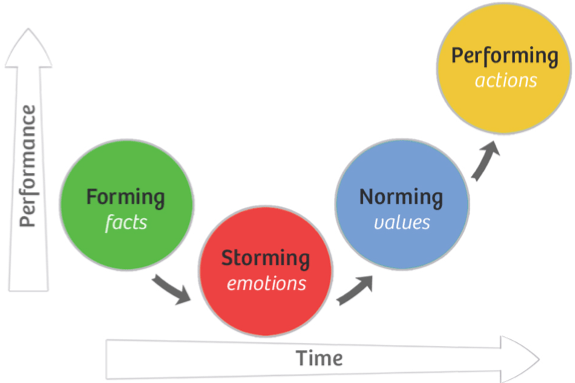
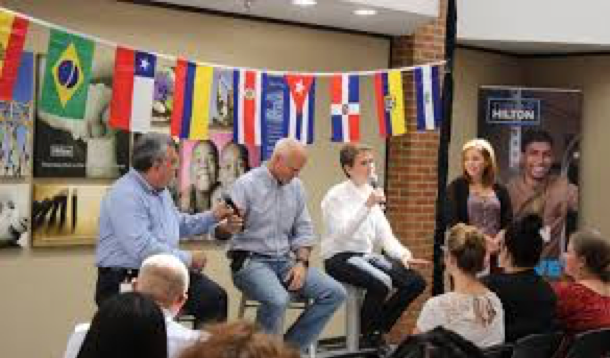
Ibarra and Hansen (2011) argued that diverse teams generate greater outcomes if they are well-led. From the statement, the advantage is the diversity of experiences and areas of expertise that the team members possess, and the different mindsets may provide innovative insights to achieve objectives (Koopmans, Damen, and Wagner 2018: 989). Businesses are strategizing to enter the global market, which people from different backgrounds will assist the organizations to explore potential competitive advantages in internationalization and achieving success in other countries (Mullins, and Christy 2016: 135). By using a theory to further explain about it, Clinical Trials Administrator (2009: 140) discussed about Bruce Tuckman’s Evolution of Team in a series of steps that teams experience when the team is formed. In Storming Stage, if the diversity in the team is accepted by all members, then they can perform better in Performing Stage because personal relationships like trust helps to embrace the unique differences among members. However, the model assumes that the whole team of people would move and progress to the next level together, which is inconsistent with reality, as the perception of the movement of stages depend on individual differences (Seck, McArdle, and Helton 2014: 33). An example is Hilton, which they believe that their commitment in recruiting and retaining talents with different backgrounds, will contribute to achieving their mission of being the most hospitable company worldwide (Hilton 2018).
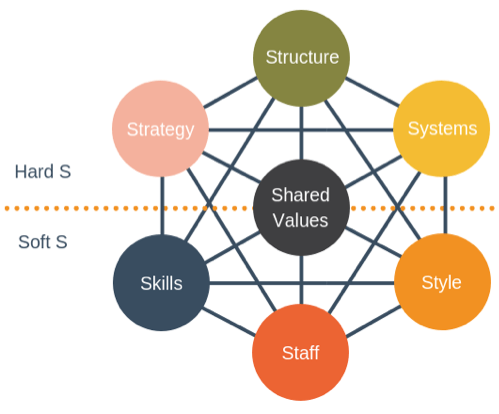
The challenge is the internal politics that may arise due to discriminations, because the biasness causes misunderstanding and underestimation of peers’ ability in completing jobs, thus the employees may focus their energy on sabotaging others’ works (Garran et al. 2015: 802; Rashid, Islam, and Ahmer 2019: 184). McKinsey’s 7S Model explores seven elements that contribute to an organization’s success, one of the elements is Staff, which concerns employees’ desire for motivation and development (Singh 2013: 41). Internal political activities cause unfair allocation or accessibility of resources such as information, thus neglecting the Staff’s needs for development, as they can’t fulfil their potential to make the right decisions (Singh 2013: 43). The limitation of the model is the insufficient focus on the impact of external environment that may influence the business, such as customers and competitors’ actions (Mitchell, Fredendall, and Cantrell 2015: 3-4). For example, WeWork from America had received lawsuits due to the age discriminations that caused disrespectful attitude towards younger employees (Gassam 2019). Furthermore, the diversity of viewpoints slow down decision-making process, as the differences of perspectives may not be accepted and will cause conflicts that break down team synergies (Annan et al. 2008: 391)
Ability to Manage Diverse Team in Hospitality Industry

For Hospitality Industry, it is one of the most crucial skills to manage a diverse team, because individuals are different in their mindset and their ways of doing things, thus the employment of different people requires high quality management skills in order to leverage the employees’ strengths and weaknesses to increase productivity of the organization (Shaban 2016: 77). Moreover, the operations in hospitality industry often involve cross-cultural collaboration to maximize employees’ contributions to deliver higher value to tourists or business travellers that come from all over the world (Shaban 2016: 77-78). For example, Marriott International Group emphasizes on creating an inclusive environment to the employees and treat people equally by valuing individual differences, which would help to increase cultural awareness and to develop multigenerational workforce (Marriott International 2019). David Rodriguez, who is the Executive Vice President of the organization successfully manage diverse teams by providing open doors to all types of background and characteristics of people in their operations, including the involvement of women, LBGT and disabled people in significant leading roles (Marriott International Inc. 2019).
Management of Diversity

When a manager acknowledges the importance of diversity in the organization, the manager would arrange the subordinates in job areas that they perform better in, which will increase the participation rate of the subordinates in making collective decisions, because the subordinates do not see their differences as a source of conflict or burden of the team (Bae, Lee, and Sohn 2019: 570). Therefore, the employees would be comfortable to voice out their opinions and feelings, to further enhance the interactional relationships through the culture of inclusiveness, which will increase the synergies in the team to increase productivity (Bae, Lee, and Sohn 2019: 571-572). For example, Michelle Miller from Walgreen managed diversity by putting people into roles that fit their talents, thus the result was increased sales, profits and customers’ satisfaction, because she allowed the employees to practice skills that they do best to the extent that the employees master the skills of their own, such as restocking shelves and customer service (Buckingham 2005).
Conclusion
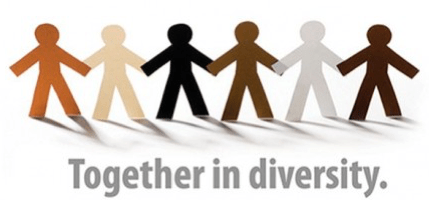
As organizations are expanding into the international arena, diversity is an unavoidable element that will contribute more to the organization’s success if diversity is managed properly, thus diversity management is utterly important in organization. However, I believe that the management of diversity may be further improved by eliminating discriminations that reduce possibilities of active participation, as discriminations stop people from understanding others’ viewpoint and will lead to conflicts that impede constructive diversity (Wisthaler 2013: 358-359).
(754 words)
References
Annan, J., Bowler, J., Mentis, M., and Phillipson, R. (2008) ‘Understanding Diversity in Educational Psychology Teams’. School Psychology International [online], 29(4), 387–399. DOI: 10.1177/0143034308096440 [1 October 2019]
Bae, K. B., Lee, D., and Sohn, H. (2019) ‘How to Increase Participation in Telework Programs in U.S. Federal Agencies: Examining the Effects of Being a Female Supervisor, Supportive Leadership, and Diversity Management’. Public Personnel Management [online] 48(4), 565–583. DOI: 10.1177/0091026019832920 [27 September 2019]
Buckingham, M. (2005) ‘What Great Managers Do’. Harvard Business Review [online] Mar 2005, 83(3). available from
<https://hbr.org/2005/03/what-great-managers-do> [23 September 2019]
Clinical Trials Administrator (2009) ‘Forming, storming, norming, performing: four-stage evolution of a top team’. Clinical Trials Administrator [online] 7(12), 140–141. Available from
<https://search-ebscohost-com.ezproxy.uow.edu.au/login.aspx?direct=true&db=rzh&AN= 105291317&site=eds-live> [25 September 2019]
Garran, A. M., Aymer, S., Gelman, C. R., and Miller, J. L. (2015) ‘Team-Teaching Anti-Oppression with Diverse Faculty: Challenges and Opportunities’. Social Work Education [online], 34(7), 799–814. DOI: 10.1080/02615479.2015.1062086 [25 September 2019]
Gassam, J. (2019) ‘WeWork Sued For Age Discrimination–Learning Lessons For Companies’. Forbes [online] 26 June. available from
<https://www.forbes.com/sites/janicegassam/2019/06/26/wework-sued-for-age-discriminatio n-learning-lessons-for-companies/#29872240736b> [25 September 2019]
Hilton (2018) Hilton Ranked #1 Workplace for Diversity and Parents in 2018 [online] available from
<https://newsroom.hilton.com/corporate/news/hilton-1-workplace-for-diversity-and-parents?WT.mc_id=zLADA0WW1XX2OLA3DA4Aff5Aff6MULTIBR7_138624670_2126220> [21 September 2019]
Ibarra, H., and Hansen, M. T. (2011) ‘Are You a Collaborative Leader?’. Harvard Business Review [online] July Issue. available from
<https://hbr.org/2011/07/are-you-a-collaborative-leader> [20 September 2019]
Koopmans, L., Damen, N., and Wagner, C. (2018) ‘Does diverse staff and skill mix of teams impact quality of care in long-term elderly health care? An exploratory case study’. BMC Health Services Research [online] 18(1), 988-999. DOI: 10.1186/s12913-018-3812-4 [20 September 2019]
Marriott International (2019) Diversity & Inclusion – Corporate [online] available from
<https://www.marriott.com/diversity/corporate-diversity.mi> [25 September 2019]
Marriott International, Inc. (2019) ‘Marriott International Ranks #2 on 2019 DiversityInc Top 50 Companies for Diversity List’. PR Newswire [online] 9 May. available from
<https://www.prnewswire.com/news-releases/marriott-international-ranks-2-on-2019-diversityinc-top-50-companies-for-diversity-list-300847650.html> [25 September 2019]
Mitchell, B. C., Fredendall, L. D. and Cantrell, R. S. (2015) Using McKinsey’s 7 S Model to Empirically Examine Organizational Effectiveness among the NBA Teams. ‘IABPAD Conference Annual Meeting 2015’. 1-22. held 10 January 2015 at University of Maryland Eastern Shore. Florida: National Basketball Association (NBA)
Mullins, L. J., and Christy, G. (2016) Management & Organisational Behaviour. 11th edn. Harlow: Pearson Education
Rashid, M. A., Islam, T., and Ahmer, Z. (2019) ‘How organizational Politics Impact workers job related outcomes?’. Journal of Political Studies [online] 26(1), 183–191. available from
<https://search-ebscohost-com.ezproxy.uow.edu.au/login.aspx?direct=true&db=poh&AN=1 37393188&site=eds-live> [25 September 2019]
Seck, M., McArdle, L., and Helton, L. (2014) ‘Two Faculty Groups’ Process in Delivering a Joint MSW Program: Evaluating the Outcome’. Journal of Social Service Research [online] 40(1), 29–38. DOI: 10.1080/01488376.2013.845125 [1 October 2019]
Shaban, A. (2016) ‘Managing and Leading a Diverse Workforce: One of the Main Challenges in Management’. Procedia – Social and Behavioral Sciences [online], 230, 76–84. DOI: 10.1016/j.sbspro.2016.09.010 [25 September 2019]
Singh, A. (2013) ‘A Study of Role of McKinsey’s 7S Framework in Achieving Organizational Excellence’. Organization Development Journal [online] 31(3), 39–50. available from
<https://search-ebscohost-com.ezproxy.uow.edu.au/login.aspx?direct=true&db=heh&AN= 94502348&site=eds-live> [25 September 2019]
Wisthaler, V. (2013) ‘Identity Politics in the Educational System in South Tyrol: Balancing between Minority Protection and the Need to Manage Diversity’. Studies In Ethnicity & Nationalism [online], 13(3), 358–372. DOI: 10.1111/sena.12051 [28 September 2019]
 MBA
MBA 
Hi Melissa, I agree that developing an effective diversity team is important to the hospitalization industry. Would you think that carrying out severe disciplinary actions towards employees who discriminate or sabotage the colleagues is a good idea to stop all the internal conflicts so that diversity within the workplace can be facilitated? Or could you share another way which you think is more productive to cut down all the internal politics?
LikeLike
Hi Pei Kie. I believe that severe disciplinary actions would definitely help to reduce the practices of discriminations in the organization. However, I believe that merely disciplinary actions will not eliminate the unethical practices, as the employees may obey only due to the fear of coercive forces, but deep inside they may still discriminate the other employees in more subtle ways, such as not having lunch with the employees who are different from them.
Therefore, I believe that team activities that mandate all employees’ collaborations would be a good idea for them to gain more understandings regarding each other. Moreover, the top management or other managers should take up the responsibilities to educate the employees to treat others like how they themselves want to be treated, which also involve the managers to set up a good example for their employees to avoid discriminations. Furthermore, an anonymous complaining system can be set up on Internet to allow discriminated employees to complain about the unfairness in workplace through easy access of QR code to lead employees to the online form.
However, on the other side, if the top management themselves are discriminating other employees, then diverse teams will only damage the organization itself, and the top management should be either replaced, or just let the organization dies on its own.
LikeLiked by 1 person
Hi Melissa, I strongly agree with your views and I believe that the suggestions you made will be very useful in reducing the discrimination issues as well as enhancing the workforce diversity. Thanks for your valuable ideas 🙂
LikeLike
Great post on managing diverse teams, Melissa. Just out of curiosity, do you agree with companies enforcing diverse workforce, meaning hiring employees from different nationalities or racial backgrounds regardless of skills? If so, why?
LikeLike
Yes, I do believe in the functionality of hiring employees from different nationalities or even different racial backgrounds. However, it depends on which industry and the structure of the organization, and much more variables that may or may not bring success to the organization. In my blog, I mentioned that hospitality industry that considered the hiring of diverse people, is very useful, because the cultural background from different people from different countries or even races, will contribute to the complete satisfaction of customers from all over the world, which is contributing to the organization’s success. Plus, for the front-line employees like receptionists, bellboys, and doormans, they do not require much high-level skills, thus their diverse background will be suitable to provide good customer services and satisfy the customers.
However, if it’s an accounting firm, which the background of individuals may not really contribute to the success of the organization, because the organization highly depends on the skills of accountants. Thus, if an accounting firm is only emphasizing about the diverse workforce instead of their professional skills, then I believe that the wrong prioritization will reduce the effectiveness of the company. At the same time, if skills are already emphasized in the organization, and the top management want to hire diverse workforce, then I think it’s not a bad idea either, because it is allowing the employees to learn much more than they could have at work, such as others’ culture, and they can explore different types of cuisine together during lunch time or after-work hours, which enhance interrelationship among employees.
LikeLike
Hi Mel! Was really interesting to read the blog as it focused on a particular industry!
Which of the 7 S do you think is the most essential for the organization’s survival?
LikeLike
Hi Meya. In McKinsey 7S Model, the core and also the paradigm of the model is Shared Values, which I believe that the Shared Values are crucial in affecting the remaining 6S of System, Structure, Strategy, Style, Skills and Staffs. The Shared Values are norms and standards that guide the employees’ behaviours, and the company’s action. The previous sentence had involved the elements of System, Strategy and Staffs, as the Systems concerns the daily processes and procedures, Strategy concerns the the direction that the company wants to achieve, and Staffs involves the employees regarding how they are recruited and motivated to be able to carry out certain actions.
For the remaining three elements of Structure, Skills and Style, Shared Values affect how the organization is organized in terms of their organizational chart, because the norms in their mindset will decide the extent to which it is hierarchical or flat structure. The values in their mindset will also affect the extent to which they strive to learn and to gain the abilities to perform better, which is related to Skills. Lastly, Shared Values can definitely affect the Style, because the management style of managers on whether they should manage with Theory X or Theory Y will be affected by the norms that they believe in.
Thus, in a nutshell, I think Shared Values is the most important element in it, which can affect the survival of an organization.
LikeLike
Hi Mel! Really interesting examples that showcase various scenarios of the challenge in managing diverse team! I personally enjoy how you brought the 7S framework into your examples (linking it to the ‘Staff’ part). Although I am curious, you mention inclusion and diversity in the workplace; what do you think is the difference and which do you think is more important?
LikeLike
Hi, Khoi! According to my own understanding, diversity is the exploration of differences in terms of background, ages, races and much more factors, which will in the end result in tolerance and embrace of the true values of differences in every individual. However, inclusion is an organizational practice that involve different kinds of people in decision-making and operations, which the respect and equal treatment will create a culture of being valued for who they are originally.
I believe that both diversity and inclusion are interdependent on each other. This is because diversity requires the culture or practices of inclusion in order to make diversity possible. For example, the organization needs to have the inclusion practices, so that they can hire people with different backgrounds without discriminations. On the other hand, inclusion requires diversity to work, because if there is no diversity, there will be no meaning for inclusion, as an inclusion without diversity is not even worth mentioning.
Therefore, I think these two elements are like fork and spoon, where they help each other in achieving much higher performance or results.
LikeLike
Hey Melissa, great structure and explanation on diversity. Love how you brought in McKinsey’s 7S Model and Tuckerman’s Team Formation Model. You mentioned that ” In Storming Stage, if the diversity in the team is accepted by all members, then they can perform better in Performing Stage because personal relationships like trust helps to embrace the unique differences among members.” But what happens if the Storming stage never ends? Are there any ways to overcome it?
LikeLike
Hi Shawn, great question you have there!
If Storming Stage seems to be never-ending process, this means that the members are still in the process of adaptation and many frictions may happen. Thus at this point, the leader must take up the responsibilities to understand the root cause of the frictions. This is because surface-level of harmony is only damaging the potential synergies of the team. Therefore, the leader should understand the main factor the contributes to the conflict, and try to fix the problem by involving all conflicting parties. For example, when there is conflict regarding way of doing things, Individual A wants to split works to be done individually, whereas Individual B wants to discuss about the project together as a team and do together with a commonly agreed idea. Thus, the leader should negotiate with both parties to find a mutually agreed solution, which may involve compromising.
Compromising is not easy, as some people may insist on their own point of view, hence the leader needs to communicate the benefits of compromising, such as eliminating time that could be wasted in unnecessary conflicts, so that the performance of the team can be improved effectively.
I believe that Storming Stage is unavoidable, and should be embraced properly, as the stage is crucial to determine the synergies of the team for the remaining time. Thus, I think the stage should not be rushed through, and the leader should try to moderate the stage to ensure constructive conflicts are done instead of destructive fights among members.
LikeLiked by 1 person
Thank you for sharing your thoughts on this Melissa! I totally agree with you, leaders should facilitate the discussion between members for them to reach a compromise for the team to move forward and be productive towards the team’s objective. Though it can be tiring and tedious, these are the things that set good leaders apart when it comes to team building. With leadership, it’s the little things that matter. Having a balanced power distance, taking the time to bond and understand team members can help this process as well. It also has direct benefits because it makes the members feel good about following the leader/manager. It makes them feel appreciated therefore making them feel pleased with following. It’s an easy thing to do, but not all leaders make the time.
Thank you again on your ideas, I see the qualities of an influential leader in you. Keep up the good work!
LikeLike