
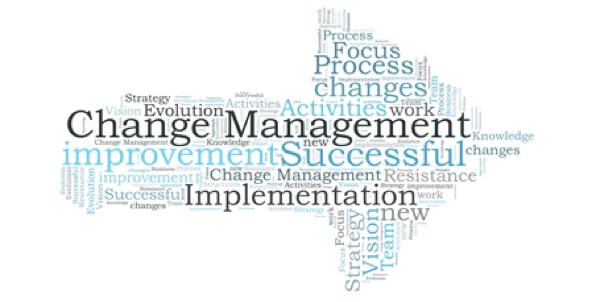
Change Management involves many variables and it is not easy to be managed due to high complications.
Argument For & Against Mullins’ Statement
According to Mullins’ (2013: 712) statement regarding the inability of management to deal with resistance to change. The argument for the statement is that people’s personalities or traits such as self-efficacy and locus of control affect people in terms of different ways of appraising change, which is why it’s impossible for management to deal with the different levels of acceptance and resistance to change that are reflected from the heterogeneity in their individual confidence to cope with change (Alfes et al. 2019: 243; Mäkikangas 2019: 205). The argument against the statement is that the management of resistance towards change is possible, because resistance is due to the misalignment between the final goal and the people’s self-interest, which the management can manage resistance by providing appropriate rewards or resources that fit the individuals’ self-interest (Chen, Tomaso, and Farris 1999: 400).
Manager’s Role & The Value in Changing Process

Managers’ role as Communicator communicate relevant information to employees and top management.
The role that managers take up when they are dealing with resistance in the changing process is Communicator, which managers act as mediator between employees and top management to direct information regarding the changing process, so that the employees feel less uncertain in the changing process and more willing to accept change, and on the other side allow the top management to understand the benefits of change (Ionescu, Meruţă, and Dragomiroiu 2014: 293-294). Transparency and honestly increase people’s willingness to support the changing process due to less uncertainty (Hewison 2012: 861-862).
The value that resistance brought to changing process is the Value of Understanding which treats the resistors as a source of useful input to enhance the changing process (Ford, and Ford 2009). The resistance should not be ignored, because those that are outspoken regarding the objections to the change are people who truly care to make and do things right (Ford, and Ford 2009). For example in the HBR, Harold that COO of the organization adopted one of the resistors’ opinion to carry out consolidated meeting, which had met the organizational goals more effectively (Ford, and Ford 2009).
Change Management Model
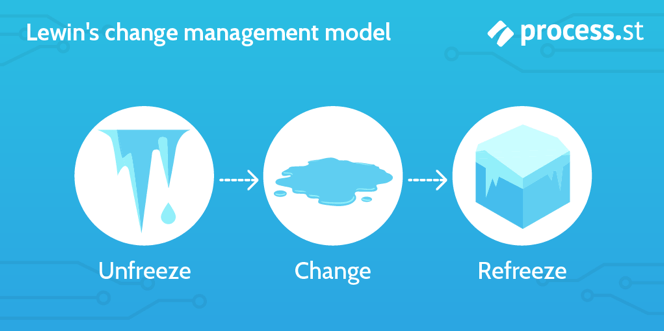
Lewin’s Three-step Change Model which emphasizes on the necessary steps to achieve successful change.
The Change Management Model that is recommended to managers is Kurt Lewin’s 3-Step Change Model, which emphasizes on forces that impact changing process, such as the forces that sustain present situation (Shafy et al. 2019: 84). The Model begins with Unfreezing existing situations, which allow Movement of change to happen in the second step, and the third step of Refreezing ensure the result of change remain in place (Levasseur 2001: 71). The model involves the concept of causing disequilibrium to create equilibrium, which means that the managers need to drive forces to overcome resisting forces, so that change can happen (Manchester et al. 2014: 85). The last step of Refreezing is crucial to ensure that the change is long-lasting and effective, with external structure or forces to enforce the change (Manchester et al. 2014: 86). Many managers only focus on Movement, by skipping Unfreezing and Refreezing due to insufficient time or resources to make effective change, which the understanding of the Model will allow managers to execute the right actions to initiate change. The advantage of it is everyone’s involvement in changing process in terms of their level of resistance in the first step of Unfreezing process, which the change will be seen as more acceptable in the organization instead of merely allowing the leader to make his own decision (Hussain et al. 2016: 124). The limitation is the ambiguities involved in determining when to switch to the next phase from one phase, and its difficulty in assessing the level of disequilibrium required to overcome the resistance forces (Friedman 2017).
Organizational Example
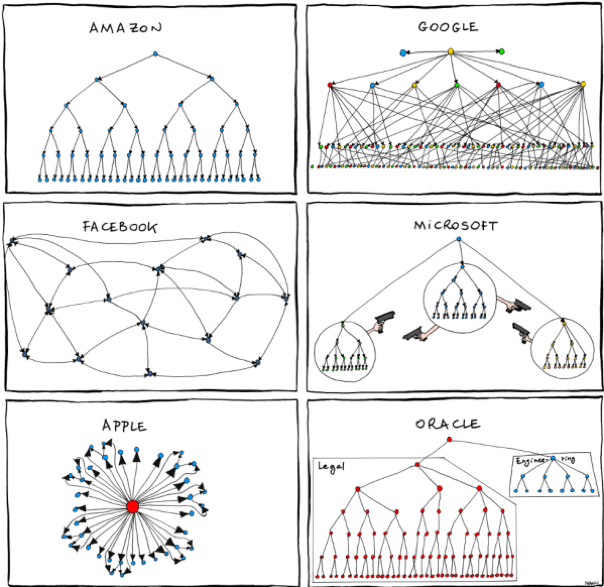
An illustration which shows different structures of big companies, however Microsoft’s was to point guns against each other, signalling their internal competition.
Brass (2010) was the vice president in Microsoft, and he believed that the intense internal competition had created a dysfunctional organizational culture, because the employees’ efforts are focused on destructing other colleagues’ works (Eblin 2010). Thus, in 2014, Satya Nadella, the new CEO implemented major organizational reengineering to eliminate the internal competition, through the unity of previously separated work units into one whole group of employees with common goals (Troyani 2019). The restructuring process disrupt the previous corporate culture of competition, which the underlying beliefs that support the culture is very difficult and takes a long time to be changed, thus the communication of vision, mission and objectives are crucial to lead the employees onto the right track (White 2014). By using Lewin’s Three-Step Model, the communication can help to unfreeze the previous culture, so that people accept change more readily and catalyse the process of change (Rosenbaum, More, and Steane 2018: 288).

Satya Nadella who had brought Microsoft to another new level of success after major organizational restructuring.
Conclusion
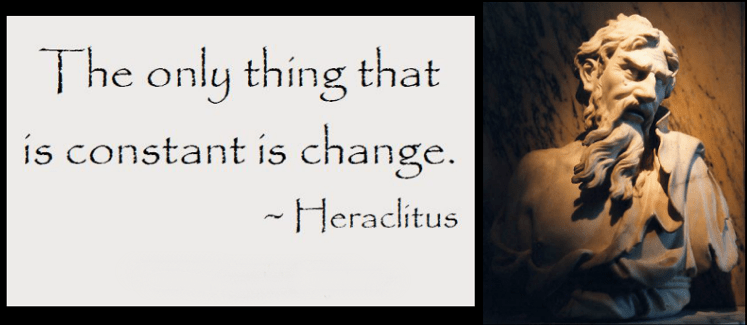
Heraclitus had famously quoted the sentence which says that change is always happening without any pause.
Heraclitus had said that the only constant is change, which change inevitably can happen to anyone anytime anywhere, which is why change management must be properly managed to avoid unnecessary conflicts. No matter change is within IT industry like Microsoft or other industries, the management of change differs because the extent to which the employees accept or resist the change will affect the effectiveness of the management effort. Hence, the manager or leader must analyse and evaluate the situation and the people involved to take regular corrective action to ensure success of change management.
(753 words)
References
Alfes, K., Shantz, A. D., Fu, N., Bailey, C., Conway, E., and Monks, K. (2019) ‘Perceived human resource system strength and employee reactions toward change: Revisiting human resource’s remit as change agent’. Human Resource Management [online] 58(3), 239–252. DOI: 10.1002/hrm.21948 [17 October 2019]
Brass, D. (2010) ‘Microsoft’s Creative Destruction’. The New York Times [online] 4 February. available from <https://www.nytimes.com/2010/02/04/opinion/04brass.html> [22 October 2019]
Chen, C. C., Tomaso, N. D., and Farris, G. F. (1999) ‘Attitudes toward organizational change: effects of self-interest, competitive values, and ethnicity’. IEEE Transactions on Engineering Management, Engineering Management. 46(4), 399-406. DOI: 10.1109/17.797962 [17 October 2019]
Eblin, S. (2010) ‘Microsoft Takes Competition Too Far’. Executive Leadership [online] 3. available from
<https://search-ebscohost-com.ezproxy.uow.edu.au/login.aspx?direct=true&db=bth&AN= 84592757&site=eds-live> [22 October 2019]
Ford, J. D., and Ford, L. W. (2009) ‘Decoding Resistance to Change’. Harvard Business Review [online] April 2009 Issue. available from
<https://hbr.org/2009/04/decoding-resistance-to-change> [2 November 2019]
Friedman, M. (2017) A Theory That Matters: Lewin’s Three Phases of Organizational Change [online] available from
<http://www.mitchellfriedman.com/2017/11/a-theory-that-matters-lewins-three.html> [19 October 2019]
Hewison, A. (2012) ‘Nurse managers’ narratives of organizational change in the English National Health Service’. Journal of Nursing Management (John Wiley & Sons, Inc.) [online] 20(7), 858–867. DOI: 10.1111/j.1365-2834.2012.01359.x [20 October 2019]
Hussain, S. T., Lei, S., Akram, T., Haider, M. J., Hussain, S. H., and Ali, A. (2016) ‘Kurt Lewin’s change model: A critical review of the role of leadership and employee involvement in organizational change’. Journal of Innovation & Knowledge [online] 3(3), 123-127. DOI: 10.1016/j.jik.2016.07.002 [19 October 2019]
Ionescu, E. I., Meruţă, A., and Dragomiroiu, R. (2014) ‘Role of Managers in Management of Change’. Procedia Economics and Finance [online] 16, 293–298. DOI: 10.1016/S2212-5671(14)00804-1 [20 October 2019]
Levasseur, R. E. (2001) ‘People Skills: Change Management Tools–Lewin’s Change Model’. Interfaces [online] 31(4), 71-73. DOI: 10.1287/inte.31.5.71.9674 [19 October 2019]
Mäkikangas, A., Mauno, S., Selenko, E., and Kinnunen, U. (2019) ‘Toward an understanding of a healthy organizational change process: A three-wave longitudinal study among university employees’. International Journal of Stress Management [online] 26(2), 204–212. DOI: 10.1037/str0000059 [17 October 2019]
Manchester, J., Gray-Miceli, D. L., Metcalf, J. A., Paolini, C. A., Napier, A. H., Coogle, C. L., and Owens, M. G. (2014) ‘Facilitating Lewin’s change model with collaborative evaluation in promoting evidence based practices of health professionals’. Evaluation and Program Planning [online] 47, 82–90. DOI: 10.1016/j.evalprogplan.2014.08.007 [19 October 2019]
Rosenbaum, D., More, E., and Steane, P. (2018) ‘Planned organisational change management : Forward to the past? An exploratory literature review’. Journal of Organizational Change Management [online] 31(2), 286-303. DOI: 10.1108/JOCM-06-2015-0089 [22 October 2019]
Shafy, I. A. E., Zapke, J., Sargeant, D., Prince, J. M., and Christopherson, N. A. M. (2019) ‘Decreased Pediatric Trauma Length of Stay and Improved Disposition With Implementation of Lewin’s Change Model’. Journal of Trauma Nursing [online] 26(2), 84–88. DOI: 10.1097/JTN.0000000000000426 [19 October 2019]
Troyani, L. (2019) ‘3 Examples Of Organizational Change Done Right’. Tiny Pulse [online] 19 August. available from
<https://www.tinypulse.com/blog/3-examples-of-organizational-change-and-why-they-got-it-right> [22 October 2019]
White, T. (2014) ‘Microsoft’s Big Layoffs Lays Bare the Dangers of Cultural Change’. Entrepreneur [online] 21 July. available from <https://www.entrepreneur.com/article/235571> [22 October 2019]
 MBA
MBA 
Hi Melissa! First of all, I like how you address and value the resistance from employees for an organisation’s further development and improvement. It has provided me another kind of perspective on the topic. Besides, you pointed out some leaders tend to skip the unfreezing and refreezing stages due to time and resources constraints. In order to save the cost and time, do you think one can actually implement all the 3 stages introduced by Lewin simultaneously?
LikeLike
Hi Pei Kie! Yes, I do think that all 3 stages in the model can be implemented even if there are huge cost and time constraints. However, I do not believe that the result will be perfectly effective, because an organization which involves so many people will not change at the same time with the same pace, because they all have their own readiness to face the change, which is why rushing through the 3 stages with constraints may lead to uneven changes to the organization, even if the refreezing stage is done.
I think it is impossible to force someone to change at the same pace as you, so in terms of this topic, I believe that it must be really difficult to initiate a completely effective change. Therefore, by having time and cost constraints, the lesser people involved, the higher probability of successful change.
Furthermore, cost constraints are always a large barrier that stops an organization from changing successfully, because Refreezing stage requires high cost, such as setting up a reward system or feedback system will require investments in technological aspects or higher costs associated with the change. Therefore, it is concluded that the 3 steps can be done with time and cost constraints, but the probability of success may be lower and may not be guaranteed.
LikeLiked by 1 person
I appreciate your prompt response and detailed evaluation, Melissa 🙂
LikeLike
Hey Melissa, your blog post is very clear and written comprehensively as usual. I am curious as to how you would handle individual resistance who has strong selective perception/ bias towards you and management with the application of Kurt Lewin’s 3 step model. The most important challenge would be unfreezing, and how would you approach it?
LikeLike
Good day Kiki, that’s a really great question!
I have always believed that any Selective Perception or Biasness have a certain source of mindset that support certain perceptions or views. Because it’s impossible that Biasness is generated in vacuum. So, in the process of Unfreezing, understanding the people’s sources of the Selective Perception, as in ‘Why’ do they think so.
When their mindset is understood, it will be easier to negotiate or talk to them on the matter specifically, so that the manager can talk some sense into them and open up their mind.
However, understanding is not an ideal method if the people are so stubborn that it’s impossible to be changed. Thus, in that scenario, time is the key, which the manager needs to patiently work with the people to slowly show them the benefits of changing, or even show them the benefits that suit the people’s self-interest. Furthermore, providing feedback to the people allow them to see which part of their job or operation is lagging behind, and also acquire feedback from them to understand their concerns, because sometimes their resistance are meaningful sources of input to further improve the changing process.
LikeLike
Hello Melissa, very good work on your clear explanation of Kurt Lewin’s 3 step change model. One of the elements of the change model is Unfreezing. As a leader, how would you implement this on your team members?
LikeLike
Good day Shawn! The Unfreezing Stage requires the breaking down of current mindsets, which may or may not create resistance to the changing process. However, I think it is crucial to have good understanding of my teammates before I even have the intention to make changes. For example, if some team members are more towards High Uncertainty Avoidance, then I need to have as much understanding of the change as possible before implementing the change, so that I can provide as much information to the teammates as possible to avoid any unnecessary misunderstanding that delay the changing process. Moreover, the final results and benefits should be understood and communicated to the teammates, so that they are mentally prepared to face the obstacles or difficulties in the changing process. At the same time, I believe that I am also preparing myself to face the difficulties that I may face in the changing process, because the teammates’ reactions towards the change allow me to grasp the idea of who requires more efforts to be tackled with after change is implemented.
LikeLike
Hello Mel! 🙂 Such an amazing blog!
In your opinion, which step in the change management model is the hardest to implement?
LikeLike
Hi Meya! I think all three steps of Lewin’s Model are having certain extent of difficulties, however I believe that Unfreezing is the hardest step, because it requires a large amount of time and efforts to build the momentum for change. Moreover, Unfreezing Stage is the stage which has the most resistance towards the changing process, and it requires appropriate change management and interaction with people to ensure that the resistance can be overcome successfully. Furthermore, the building of momentum for change requires the efforts of not just the leader him or herself, but also the other employees and staffs from the top to the bottom of the organizational hierarchy, which will need to involve effective communication to allow transparency to persuade the people to have the intention to drive change. The effective communication is very difficult to be achieved, especially if the size of the organization is very big and consists of many employees, and also if the organization is operated across national boundaries. This is because the communications required may not be suitable for certain people, such as a meeting may be negatively viewed by some employees as overly-formal and irritate the people. And also, the electronic communications like email and video conference can’t fully convey the initiation of the change or the process of change, which will lower the effectiveness of persuasion towards the acceptance of change.
LikeLike
Hi there Mel! Personally, I think you’ve captured an excellent-depth of change management! and you have good flow in your blog making it easy to follow! Good job! Although in your organisational example of Microsoft, you mentioned they were having internal competition , in your opinion, to what extent can competition be good? and as a leader how do you balance good competition and unhealthy ones?
LikeLike
Good day Khoi! In my opinion, competition is good in terms of minimizing the happening of complacency, because competition allows people to see the needs to improve themselves, which is constructive for the growth of an organization. Moreover, competition is allowing people to observe and learn from others, which enhance self-development by revealing the potential areas of improvement.
As a leader, I would try to make sure that the competition is healthy without politics like sabotaging others’ works, because once the competition turn into unhealthy politics, the morale and productivity will be significantly decreased. Hence, I will monitor the operations or team activities to ensure that the relationship among my followers are healthy and they view each other as a learning opportunity instead of an enemy. However, if unhealthy competition is spotted, I will provide advise to ensure that the followers are clear with their direction, which I’ll guide them in operations to encourage open-mindedness to accept constructive criticism.
LikeLike