
Principles Areas of Ethics
Brown, Treviño and Harrison (2005: 120) had defined ethical leadership as an approach that communicates to followers with two-way interaction, enhancement and decision-making. There are two major areas that further define the concept of ethical leadership. Deontological Ethics emphasize on universal moral principles that every individual should apply, such as good will that people should adopt when doing something (Baumane-Vitolina, Cals, and Sumilo 2016: 110). The argument for Deontological Ethics is it provides an absolute law to be followed by all humans, which is the concept that humans must take up own responsibilities to do things with good intentions (Ware 2019: 575). However, the argument against Deontological Ethics is the ignorance of consequences, which this theory avoids the comprehension of possible consequences as long as the starting point of good will is present (Ware 2019: 574-575).
The second principle area of ethics is Teleological Ethics, which make the assumption that a decision must be based on the evaluation and judgment of potential (Baumane-Vitolina, Cals, and Sumilo 2016: 110). The argument for Teleological Ethics is the consideration of consequences which may be reached from the given alternatives, which may eliminate the possibility of harmful outcomes to others that stemmed from “good will” from Deontological Ethics (Sparks and Pan 2010: 412). The argument against this theory is that the theory use the ideas of “happiness” and “absolute good” to measure the consequences achieved, which the definition of these feelings are subjective depending on the judgment of particular individual, thus causing the severity of consequences to be subjected to variation (Ştefan 2014: 928).
Ethical Leadership – 4V Model of Ethical Leadership
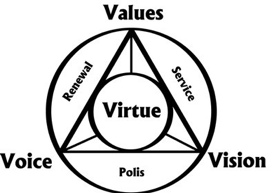
To explain the idea of ethical leadership, the 4V Framework for Ethical Leadership by Dr. Bill Grace is put into consideration, to determine both the internal and external elements that contribute to ethical behaviours (Cooper 2014). According to Dr. Poh (2019), this model emphasizes the development of moral, people, leadership and the community, which are categorized as Values, Vision, Voice, and Virtue. This framework begins with internal exploration of own Values, which are the ideas of what is right and wrong, along with individual’s perception and motivation (Kar 2014: 114; Poh 2019). Then, by using the values, one should frame a Vision on how the world should be, and proceed to articulate the vision by using Voice to express the Vision (Kar 2014: 114; Poh 2019). The fourth element is Virtue, which the ethics is being practiced until the behaviours become the means to achieve common goods (Kar 2014: 114).
Examples of Ethical and Unethical Leaderships
It is believed that individual and organizational effectiveness can be positively affected by the presence of ethical leadership, thus two companies are selected to illustrate the two sides of the debate (Rubin, Dierdorff, and Brown 2010: 217).

Walmart was sued because proper seating was not provided to the employees, and the employees consider that as a violation of human rights (Farfan 2019). As a result, the company had suffered penalty of $65 million that is paid to nearly 100,000 cashiers who are working in Walmart, furthermore Walmart had lost their reputation and image as a responsible employer (Wiessner 2018). In this case, it is believed that Walmart was following Deontological Ethics, because Walmart was following the articulated job descriptions that listed out employees’ responsibilities to move around the stores to stock up shelves and greet customers instead of just sitting at the cashier. Through the investigation of Deontological Ethics, Walmart is implementing ethical leadership, as the organizational effectiveness is enhanced through pushing the employees to walk around the stores to help out the customers. However, it is considered as unethical leadership if Teleological Ethics are put into place, as the result in the end was lawsuit and employees’ dissatisfaction that lead to organizational ineffectiveness.
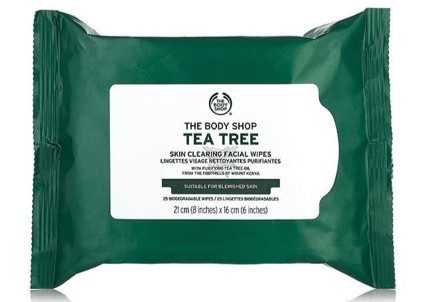

The second example of organization is The Body Shop, which their recent strategy to discontinue the production of wet wipes is considered as ethical leadership, as the decisions were based on Teleological Ethics that examine consequences of clogged waterways due to wet wipes being flushed down the toilet (Moss 2019). The kind act resulted in positive word-of-mouth and enhanced brand image on social media, as companies like Lanes Group posted good reviews regarding Body Shop’s ethical decision (Lanes for Drains 2019). In terms of Deontological Ethics, the decision is unethical because it is businesses’ duty to satisfy customers’ needs, especially those customers that heavily rely on the wipes to remove makeup. However, Body Shop’s decision will reduce the possibility of floods, which in turn creating greater good to the communities.
Conclusion
There are always two sides of the same coin, different perspectives should be adopted by leader, so that possible consequences can be further examined to avoid unnecessary harmful effect. However, it is not an easy task to view something with different lenses, which is why leaders should leverage ethics as a process of directing commitments to convey the necessity of morality in everyone’s life (Fehr, Yam, & Dang 2015: 182).
(747 words)
References
Baumane-Vitolina, I., Cals, I., and Sumilo, E. (2016) ‘Is Ethics Rational? Teleological, Deontological and Virtue Ethics Theories Reconciled in the Context of Traditional Economic Decision Making’. Procedia Economics and Finance [online] 39, 108–114. DOI: 10.1016/S2212-5671(16)30249-0 [10 September 2019]
Brown, M. E., Treviño, L. K., and Harrison, D. A. (2005) ‘Ethical leadership: A social learning perspective for construct development and testing’. Organizational Behavior and Human Decision Processes [online] 97(2), 117–134. DOI: 10.1037/t19109-000 [10 September 2019]
Cooper, P. (2014) ‘The Four V’s of Ethical Leadership’. Pennsylvania State University [online] 27 April. available from
<https://sites.psu.edu/leadership/2014/04/27/the-four-vs-of-ethical-leadership/> [17 September 2019]
Farfan, B. (2019) ‘Another Day, Another Walmart Class Action Employee Lawsuit’. The Balance [online] 12 January. available from <https://www.thebalancesmb.com/walmart-classic-action-employee-lawsuits-3974960> [10 September 2019]
Fehr, R., Yam, K. C., and Dang, C. (2015) ‘Moralized Leadership: The Construction and Consequences of Ethical Leader Perceptions’. Academy of Management Review [online], 40(2), 182–209. DOI: 10.5465/amr.2013.0358 [19 September 2019]
Kar, S. (2014) ‘Ethical Leadership: Best Practice for Success’. IOSR Journal of Business and Management [online] 21(1), 112-116. available from
<http://iosrjournals.org/iosr-jbm/papers/ICIMS/Volume-1/14.pdf> [17 September 2019]
Lanes for Drains (2019) Facebook Update. 28 May. available from <https://www.facebook.com/LanesForDrains/posts/we-are-pleased-to-hear-that-the-body-shop-have-decided-to-discontinue-wipes-chan/2550473751644166/> [25 September 2019]
Moss, R. (2019) ‘The Body Shop Discontinues All Face Wipes In Favour Of Sustainable Alternatives’. Huffington Post [online]23 May. available from <https://www.huffingtonpost.co.uk/entry/the-body-shop-discontinues-all-face-wipes-in-favour-of-sustainable-alternatives_uk_5ce57814e4b0db9c29917550?guccounter=1&guce_referrer=aHR0cHM6Ly93d3cuZ29vZ2xlLmNvbS8&guce_referrer_sig=AQAAAHrCF_PILdXPxUXFSjxqGzdw8O8bRb7QCkvPua1VTVgv9588e3ZLAx2rE7YYzRq9fA9P_cE0h6YaQIIUpF_zmnTm9I9yzVKG9dtVIY9Dvx0z5uW59Emo32zL4DhT4hIVqyeF_JTp_g3NkCGib2W1aqO5BYxAUviCXqP4Jh2omKTb> [10 September 2019]
Poh, P. S. (2019) Ethical Leadership in Business [lecture] module INTM005CL, 7 September 2019. Selangor: Inti International College Subang
Rubin, R. S., Dierdorff, E. C., and Brown, M. E. (2010) ‘Do Ethical Leaders Get Ahead? Exploring Ethical Leadership and Promotability’. Business Ethics Quarterly [online] 20(2), 215-232. DOI: 10.5840/beq201020216 [12 September 2019]
Sparks, J. R., and Pan, Y. (2010) ‘Ethical Judgments in Business Ethics Research: Definition, and Research Agenda’. Journal of Business Ethics [online] 91(3), 405-418. DOI: 10.1007/s10551-009-0092-2 [10 September 2019]
Ştefan, I. (2014) ‘Arguments for and Against Abortion in Terms of Teleological and Deontological Theories’. Procedia – Social and Behavioral Sciences [online] 149, 927–935. DOI: 10.1016/j.sbspro.2014.08.301 [10 September 2019]
Ware, O. (2019) ‘Fichte’s Normative Ethics: Deontological or Teleological?’ MIND [online] 127(506), 565–584. DOI: 10.1093/mind/fzx013 [10 September 2019]
Wiessner, D. (2018) ‘Walmart to pay $65 million to settle lawsuit over seating for cashiers’. Reuters [online] 11 October. available from <https://www.reuters.com/article/us-walmart-lawsuit/walmart-to-pay-65-million-to-settle-lawsuit-over-seating-for-cashiers-idUSKCN1ML265> [25 September 2019]
 MBA
MBA 
Hi Melissa, great application of both deontological and teleological ethics on Walmart and The Body Shop. Love how you show two different perspectives of ethics on the same case. Your conclusion emphasize the importance of embracing different perspectives. However, if an ethical leader is forced to choose between human rights and environmental consequences, which should be prioritize?
LikeLike
Hi Kiki, the job of a leader is very difficult, as they need to balance different areas of priorities and also the interests of multiple stakeholders. Therefore, the answer to your question is that the environmental consequences must be prioritised, because we humans are depending on the environment itself, as we need the raw materials for businesses and most importantly, we need clean air and water to survive. In fact, the environment doesn’t need us at all, as most humans do not cherish the environment and they destroy it without consideration of the consequences. Therefore, I believe that the environment should be well-treated, or else there won’t even be humans on this planet, and human rights are no longer a large issue in front of the environmental issue.
However, what I say here doesn’t mean that human rights issues should be neglected, because I believe that both issues can be tackled at the same time, as the process and consequences of both issues are not conflicting with each other. Hence, I think an ethical leader should deal with both issues at the same time, but environmental issues may require much higher amount of time and money than the human rights issues.
LikeLike
Hello Melissa, I am amazed by how you could apply and explain both of the ethics theories on the selected companies at the same time. I understand the importance of practicing both theories while making ethical decisions like what you have emphasized in the end of your post. However, for this particular case of Walmart, do you think if they only use Teleological Theory at the first place instead of considering the Deontological Theory would help them better in being an ethical corporation, and more importantly WalMart does not need to bear the penalty charges?
LikeLike
Hi Pei Kie, yes I definitely agree that Walmart should have used Teleological Ethics first, as the consideration of consequences would allow the employees to be seated, and Walmart could have avoided the huge amount of penalty. However, thinking on another side, if Walmart really did provide seatings to employees, the employees may be lazy when they do their work, such as only sitting on the same stool at the cashier without the intention to serve customers or to restock the shelves. Or, in a more severe situation, the employees may have internal political activities to allocate informal power over others according to their seniority of working in the store, thus leading to overly glorified status assigned to the person, and the individual with power can take a seat on the cashiers and rest, while the newcomers or people with lesser power would need to walk around the stores to do their jobs.
Therefore, there are always two sides of the same coin, and it is really a tough job for the manager to balance between the advantages and disadvantages.
LikeLike
Hello Mel! Fascinating layout for the blog and the examples are so well explained.
In your opinion, how do you feel the scenario of Walmart could have been taken up? – satisfactory to both the employees and customer satisfaction?
LikeLike
Hi Meya, I believe that the answer to this question will not be a satisfactory answer for certain group of people, because it is impossible to have the perfect solution, even to a simple difficulty, Therefore, if satisfactions of employees and customers are prioritized, then the satisfaction of Walmart itself must be sacrificed. What I mean here is that Walmart should just hire a few more people to focus solely on sitting at the cashier, or just focus on greeting and serving customers. However, this solution will not be accepted by Walmart, as it requires much higher wages and salaries expenses.
On the other hand, there is a solution which may or may not work, because it depends on the capabilities and the desired career style of the employees, which is the specialization of jobs among the existing employees. This means that the employees will be evaluated based on their strengths, and allocate the employees into positions that utilise their strengths such as friendly customer service and efficient check-out process. But, if the employees requires job rotation instead of job specialization, then this method will only demotivate the employees and cause lower productivity.
LikeLike
Hello Melissa, love how you briefly but clearly explain the theories of ethics. The examples are very well explained using both teleological and deontological theories. In your opinion, do you think that Body Shop could have considered adopting degradable wet wipes instead of discontinuing it? Would this option be a much better option for the company’s shareholders?
LikeLike
Hi Shawn, yes I do believe that biodegradable wipes are feasible in such situation. However, standing in The Body Shop’s perspective which had also increase the productions of cleansing oil such as Camomile Silky Cleansing Oil, The Body Shop may support the idea of not using any wipes at all, instead, they prefer the idea of water soluble based products that will reduce the risk of clogging the water drains. Because anyway, biodegradable wipes are still wipes, and they don’t biodegrade instantly, and requires a shorter time to decompose, which could have caused floods before it’s decomposed.
I believe that wipes are not compulsory to remove makeup, because there are still many options out there that are better for the environment, and maybe wipes aren’t supposed to be continued anymore, even if the decision will lose some customers. I think it is the same scenario with open burning to deal with rubbish that causes air pollution, people may be used to such method to deal with rubbish, but it’s not a good method to get rid of rubbish and they should consider other methods such as burying organic rubbish as fertiliser.
LikeLike
Hi Mel! Like how you explain your examples and relating it to the ethical theories! It is showing your good understanding of ethical leadership by giving both sides of the story. Though, do you think, in contemporary business, as leaders, it is important to be socially responsible (like Body Shop) or they should focus on those activities that could increase their profits?
LikeLike
Hi Khoi! Personally, I believe that profit-making is a great thing, especially if the organization is acquiring profits through ethical practices and contribute part of their profits back to the society through Corporate Social Responsibility (CSR). However, I do not agree with the concept of profit-maximization, which is a concept that overly prioritize profit-making, and it may lead to immoral practices, such as Enron which had hidden their actual financial status from investors and creditors to sustain the business.
However, I think what Body Shop had done was completely altruistic, and as a huge corporation like they are right now, I do not think that profit is the biggest motivation of their business anymore, as they have enough profits to sustain the operating cost, which is why they focus on the sustainability of their business, stakeholders, and the environment.
Therefore, the answer to your question would be “It depends”, because profits are originally the purpose of starting the business, but when profits are already achieved, higher level of goals such as social responsibilities should be emphasized. So, it all depends on the status of the organization.
LikeLike