
Similarities & Differences of Leadership & Management

Leadership is an interpersonal influence that involve the ability to shape others’ attitudes and behaviours to achieve certain goals (Limbare 2012: 172). Management involves planning, organizing, leading, and controlling certain resources to accomplish performance goals. Leadership and Management are similar in the sense that both concepts involve alignment of resources and people, such as moving people into the right direction by using the right tools of control and empowerment (Young, and Dulewicz 2008: 19). Secondly, Leadership and Management are both results-oriented with determination to get people to work towards certain objective (Nderitu 2017). However, Management and Leadership are not the same concept, as leaders are change agents whereas managers maintain the status quo, which leaders embrace change and create innovations, and managers refine systems and structures (Arruda 2016). Furthermore, management is a reflection of authority to manage resources to achieve organizational goals, whereas leadership can happen to anyone, anywhere anytime, as long as the leader use what he could to influence people to transform into something more (Allen 2018).
Most Effective Approach To Manage
For a particular organization, there is always a preferred approach to manage employees in the organization, but no matter how stable is the environment that the organization is within, there is always a need to be flexible to change according to changing contexts (Coles 2018: 69). However, I believe that there is a management style that is acceptable by many companies, which is Democratic Management Style, which empower employees to participate in operations and management processes even if it involves their own material interests (Wang 2018: 1). The advantage of the model is the inclusive of employees in decision-making, thus increase organizational commitment, which may be developed into competitive advantage (Agirre, Reinares, and Freundlich 2015: 353-362). The limitation of the model is the lack of independence of the employees, which the ability of the employees on voicing out what they want and need may not be consistent with their actual needs when they are not making collective decisions (Wang 2018: 7).

No One Single Best Approach
CMI (2013) had argued that the approaches to management and leadership are subjective, with no single best approach. I believe that this statement is undeniably correct, as a leader or manager must involve in the leadership or management process, and make frequent course correction according to people that they are dealing with, the culture or context (Royce 2005: 41). Organizations must align their structures with the contingencies that they face, moreover there is no two organization that faces the exact same contingencies, hence a successful approach in one organization may not succeed in another (Bernard 1996: 17).
Ideal Business Leader
The Body Shop depends on the philosophy of sustainability in profit, people and planet (3Ps), which Anita Roddick brought the organization to a new level of success with her vision of doing good as a person and as an organization (Robinson 2014). She believes that the conduct of business can be fun and full of love, which she ensures the stakeholders’ wellbeing before emphasizing profit-making (Pless 2007: 447). I believe that people under such leadership will have opportunities for own development spiritually, which further enhance job satisfaction, because The Body Shop’s employees may choose to participate in environmental or human-rights related issues campaigns to help out more people in the world (Pless 2007: 445). Thus, I would be willing to be led by leaders like Anita, as I think the consideration of sustainability of organization and environment are interlinked, and I believe that the kindness in the workplace will allow me to view my job as my second home.

Unideal Business Leader
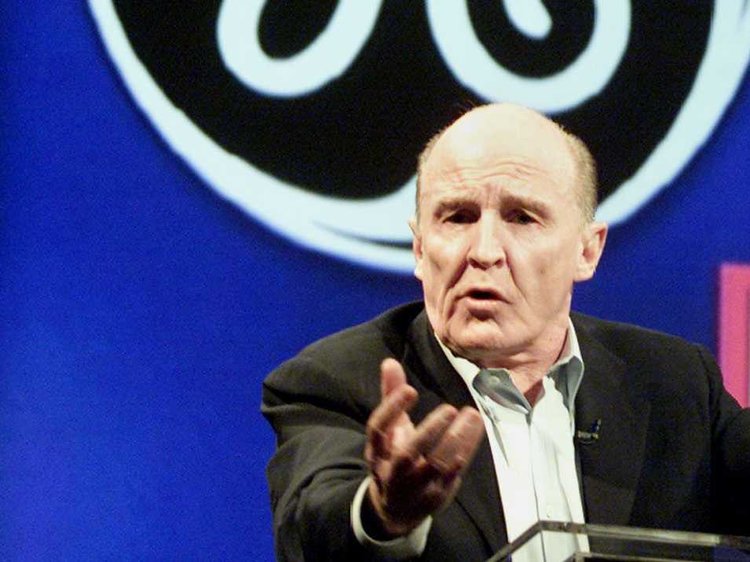
Constructive competition may be beneficial for an organization’s growth, however General Electric which was led was Jack Welch had created dog-eat-dog culture, where doing things to make themselves look good were their only priorities (Davis 2018). Jack’s philosophy of management is to fire the bottom 10% of workforce every year, which the employees only focus their time and efforts on not getting fired (Brown 2014). The culture in the company encourages organizational politics and competition that fight over limited resources to enhance their self-interest rather than the welfare of organization (King, and Levy 2012: 88-94). I do not want to be led under such leadership, because I think the political situations will cause myself to burnout due to forcing myself to compete over the resources in the organization, and in turn reduce my productivity and my opportunity to learn new things.
Recommendation
It is recommended that the right team norm should be developed, such as the norm of encouraging voice by expressing own suggestions and opinions, so that a culture of knowledge sharing can be cultivated and enhance the team’s productivity (Kremer, Villamor, and Aguinis 2019: 67). Thus, the leader needs to be a good role model for the subordinates, which means that the leader should encourage engagements by asking for subordinates’ views and motivate them to speak up (Morris 2016).
(740 words)
References
Agirre, I., Reinares, P., and Freundlich, F. (2015) ‘Does a Democratic Management Model Enhance Performance through Market Orientation? Empirical Evidence from the Mondragon Industrial Group’. Review of Radical Political Economics [online] 47(3), 345–367. DOI: 10.1177/0486613414542770 [12 October 2019]
Allen, T. (2018) ‘What Is The Difference Between Management And Leadership?’. Forbes [online] 9 October. available from <https://www.forbes.com/sites/terinaallen/2018/10/09/what-is-the-difference-between-management-and-leadership/#11643d2774d6> [3 October 2019]
Arruda, W. (2016) ‘9 Differences Between Being A Leader And A Manager’. Forbes [online] 15 November. available from <https://www.forbes.com/sites/williamarruda/2016/11/15/9-differences-between-being-a-leader-and-a-manager/#3f0dde094609> [2 October 2019]
Bernard, B. (1996) ‘No such thing as … a “one best way” to manage organizational change’. Management Decision [online] (10), 11-18. DOI: 10.1108/00251749610150649 [4 October 2019]
Brown, P. B. (2014) ‘Should You Fire 10% of Your Employees Every Year?’. Inc. [online] 17 July. available from
<https://www.inc.com/paul-b-brown/should-you-fire-10-of-your-employees-every-year.html> [9 October 2019]
Chartered Management Institute (CMI) (2013) Understanding Management Styles Checklist 236 [online] available from
<https://www.managers.org.uk/~/media/Files/Campus%20CMI/Checklists%20First%20Management%20Role/Understanding%20management%20styles.ashx> [4 October 2019]
Coles, N. A. (2018) ‘Using an Adaptive Environmental Management Framework to Regulate the Unconventional Gas Industry: A Case Study of Queensland, Australia’. New Water Policy & Practice [online] 4(2), 57–73. DOI: 10.18278/nwpp.4.2.4 [12 October 2019]
Davis, A. (2018) ‘3 Lessons Every Leader Can Learn from GE’s Downfall’. Inc. [online] 22 February. available from
<https://www.inc.com/alison-davis/3-lessons-every-leader-can-learn-from-ges-downfall.html> [9 October 2019]
King, A. E. A., and Levy, P. E. (2012) ‘A Theoretical Framework for Organizational Politics during the Economic Downturn’. Research in Occupational Stress & Well Being [online], 10, 87-130. DOI: 10.1108/S1479-3555(2012)0000010007 [9 October 2019]
Kremer, H., Villamor, I., and Aguinis, H. (2019) ‘Innovation leadership: Best-practice recommendations for promoting employee creativity, voice, and knowledge sharing’. Business Horizons, 62(1), 65–74. DOI: 10.1016/j.bushor.2018.08.010 [12 October 2019]
Limbare, S. (2012) ‘Leadership Styles & Conflict Management Styles of Executives’. Indian Journal of Industrial Relations [online] 48(1), 172-179. available from
<https://search-ebscohost-com.ezproxy.uow.edu.au/login.aspx?direct=true&db=edsjsr&A N=edsjsr.2350977 5&site=eds-live> [1 October 2019]
Morris, J. (2016) ‘How These 7 Simple Phrases Can Help You Become an Effective Leader’. Inc. [online] 31 May. available from
<https://www.inc.com/the-muse/7-simple-expressions-inspiring-leaders-use.html> [12 October 2019]
Nderitu, G. (2017) ‘Similarities between Leadership and Management’. KnowsWhy [online] 23 November. available from
<https://www.knowswhy.com/similarities-between-leadership-and-management/> [2 October 2019]
Pless, N. M. (2007) ‘Understanding responsible leadership: Role identity and motivational drivers : tame anita roddick, founder of the body shop’. Journal of Business Ethics [online], 74(4), 437–456. DOI: 10.1007/s10551-007-9518-x [8 October 2019]
Robinson, S. (2014) ‘Women in Leadership: Anita Roddick’. Predictive Advantage [online] 22 June. available from
<https://predictive-advantage.com/women-leadership-anita-roddick/> [8 October 2019]
Royce, W. (2005) ‘Successful Software Management Style: Steering and Balance’, IEEE Software [online] 22(5). 40-47. DOI:10.1109/MS.2005.138 [4 October 2019]
Schermerhorn, J. R. and Hoboken, N. J. (2012) Exploring management [online] 5th edn. Kendallville: John Wiley & Sons Inc. available from
<https://search-ebscohost-com.ezproxy.uow.edu.au/login.aspx?direct=true&db=cat03332a &AN=uow.b1912578&site=eds-live> [2 October 2019]
Wang, F. (2018) ‘The perceived effectiveness of democratic management, job performance, and citizenship behavior: evidence from a large Chinese state-owned petrochemical company’. Frontiers of Business Research in China [online] 12(1), 1-25. DOI: 10.1186/s11782-018-0033-y [12 October 2019]
Young, M., and Dulewicz, V. (2008) ‘Similarities and differences between leadership and management: High-performance competencies in the British Royal Navy’. British Journal of Management [online], 19(1), 17–32. DOI: 10.1111/j.1467-8551.2007.00534.x [2 October 2019]
 MBA
MBA 
Hi Melissa! It is a well explained post on the details of the leadership styles. Besides, I am quite surprised of the fact that in General Electric, the bottom
10% of workforce would be sacked. However, do you think we can call Mr Jack Welch of General Electric as a transactional leader where he focuses on punishments on staffs who can’t perform well by firing them? Is he utilising his coercive power well to maintain the productivity of his followers?
LikeLike
Hi Pei Kie! Yes, I would believe that Mr Welch himself is a great example of transactional leader which emphasise a lot on rewards and punishments to achieve the goals. Thus, his coercive power of firing the employees is one of the example of punishing people to get people moving or striving to avoid being sacked. However, I believe that his coercive practices would only increase the employees’ productivity for short term only, because over long-term, employees will feel pressured and stressed out, which will then cause exacerbation in the employees’ performance and productivity. Moreover, it is believed that the high pressure in the company will encourage dysfunctional productivity, because people who knew that they are just not good enough, would try to make themselves look good rather than putting their efforts into productivity-increasing activities, which means that the people will just sabotage others’ works, or suck up to the boss to manipulate the performance measures.
Therefore, in a nutshell, I do not agree with Welch’s management style, and I think over long-term, the productivity and performance would be negatively associated to the amount of power that Welch practices in the organization.
LikeLiked by 1 person
Hi Melissa! Thanks for your prompt response and I personally do agree on your views too 🙂
LikeLike
Hello Mel! Admirable blog and superlative explanation on your opinion of CMI (2013) 🙂
You have mentioned that the advantage of the Democratic Management Style model is inclusive of employees in decision-making, however, the limitation states lack of independence of the employees. How would you define the statement as I believe limiting the independence of employees will impact the decision-making process?
LikeLike
Hi Meya! In Democratic Management Style, employees will have sufficient autonomy or freedom to exercise their skills or experience, which is a good thing, in terms of different kinds of unique input may be put into the operations to further improve the performance. However, the limitation regarding lacking independence of employees will reduce the effectiveness of providing autonomy to employees to make decisions. The previous sentence can be explained through the examination of employees’ skills and knowledge, which in a case where there is insufficient skills in employees, the autonomy given to employees will only result in poor decision-making. This is because the employees are not qualified to make the right decisions without external guidance or instructions. Therefore, according to your statement in the question that you had provided, it is argued that the limitation of independence to a certain extent will enhance the decision-making process by giving at least a direction to be followed by the employees, instead of merely giving them a large space to act with ineffective independence.
LikeLike
Hey Melissa, it was very entertaining reading your blog. Love the Body Shop example you used. Just wondering if you know whether the Body Shop management applies the Democratic Management style you recommended. Otherwise, could you share a personal experience of applying the suggested leadership approach?
LikeLike
Hi Kiki! For the answer of your first question, it is not clear whether The Body Shop applies Democratic Management Style or not, because among the researches that I had done, the elements of kindness and passion are emphasised a lot in their strategies and plans, but the involvement of employees in decision-making is not clearly explained. However, from what I had observed in their Corporate Social Responsibility activities that involve the employees in making conducive changes to the environment or helping human beings, I believe that the employees are entitled to certain extent of autonomy or freedom to select the types of activities to be involved within, thus proving some degree of Democratic Management in Body Shop.
In terms of personal experience of Democratic Management Approach, I believe that the current team in this subject is allowing myself to go through Democratic Management, because the team leader allows the team members to select own questions to be done in the Coursework in near future, which the autonomy increases our responsibilities, but yet at the same time provides unique learning experience to ourselves. Furthermore, the democracy increases team performance, because each of us understand which question we can do better according to our own knowledge of our skills and expertise.
LikeLike
Hi there Mel! You introduced Anita as your ideal leader, and after reading your blog, I also would like to be led by a leader like her; thank you for sharing that! Though, what particular leadership style is she portraying? It seems almost she is acting like a guardian or as a parent in the organization due to her altruistic behaviour, so maybe a paternalistic leadership? What do you think?
LikeLike
Hi Khoi! Paternalistic Leadership sounds negative in a way that portrays her as a authoritative figure that desires obedience from the subordinates, but yes, I would agree that her management style is close to a Paternalistic Leadership, because she may be dominant in her own vision of bringing the kindness to the organization and also the community, even though some employees may not agree with her vision. Hence I think the leadership is benevolent in its own way despite the negative impression that the term sounds.
On the other hand, I believe that her leadership is Servant Leadership, which her main focus is to serve people, even for strangers that she doesn’t even know. Anita focuses a lot of her efforts and time to ensure the wellbeing of the employees and the community, which is why her selfless behaviours direct my point to conclude that she’s executing Servant Leadership.
However, I don’t believe that one person can only portray one leadership style, so I think Anita is implementing both Paternalistic Leadership and Servant Leadership, probably that’s her secret to her success!
LikeLike
Hello Melissa, interesting that you brought up Jack Welsh as an unideal leader. However, I see him as an incremental leader. His goal was to make GE the world’s most competitive enterprise. Most mistakes that leaders make arise from not being willing to face reality and then acting on it. Facing reality often means saying and doing things that are not popular, but by coming to grips with reality would things get better. Jack Welsh was a leader that faced reality and started kicking those who are not relevant and inefficient in making GE a better company. Welch made drastic changes within the organization, which he believes, was instrumental to the success of the company under his management. He had a goal, and he did it to achieve his goal.
During his tenure at GE, the company’s value rose 4,000%. He rewarded those in the top 20% with bonuses and stock options. He also broadened the stock options program at GE, extending availability from top executives to nearly one-third of all employees. He is a leader that faces reality and transforms a company by cutting off the unnecessary parts, motivates and rewards his employees and gets the job done.
Wouldnt you say that he is an effective leader? What do you think about my point of view?
LikeLike
Good day Shawn. Thanks for your invaluable input regarding Jack Welch as a leader, and your opinions had enlighten me by showing me another perspective of the his leadership.
Actually from your comment, I do agree with your view, because the coercive and reward power that he possessed had served as a motivation to allow the employees to strive to work even harder.
However, I think the method of firing bottom percentage of employees to push them will only be effective for a few years, probably less than a decade, because when the worst employees are already fired, the remaining employees are the talents that are very valuable to contribute innovations or inputs to the organizational growth. Moreover, when there are some uncontrollable factors that affect the employees’ productivity such as emotional breakdown due to death of family member, Welch may not take those factors into consideration, which is unfair for the employees, and will result in loss of loyalty towards the leader due to dissatisfaction.
As a conclusion, I think everything had two sides, and it’s a really insightful discussion to take the advantages and disadvantages of Welch’s leadership into consideration.
LikeLike